If your car has spent a few years parked outside in Melbourne, the roof and bonnet have probably started to fade before the rest of it. That’s the sun. It does more damage to car paint here than hail or rain, and Melbourne weather in summer regularly pushes the UV index past 11, which the Bureau of Meteorology classes as extreme. Leave a car in an open carpark during a workday and it sits in that for around eight hours.
UV and Heat Are Slowly Wearing the Clear Coat Down
Faded paint rarely happens all at once. One day the roof just looks a shade lighter than the doors. Red cars are the classic example (you’ve probably seen an old red hatch in the street that’s gone almost pink on top), but dark blue and black suffer too. Give it long enough and the clear coat starts to go chalky and lift in patches, and at that point a polish won’t bring it back.
Heat is its own problem, separate from the UV.
On a 38 degree afternoon the bonnet can get hot enough that you wouldn’t want to rest your hand on it for long, and whatever’s sitting on the paint gets baked on. Bird droppings are the worst for this. They’re acidic, and a dropping left through a couple of hot days can leave a dull, etched mark that stays after the car’s been washed.
Flying foxes and gum sap
Anyone parking near Yarra Bend, or under fruit trees in the inner north and east, will know the flying fox problem in summer. Their droppings land overnight and dry hard by morning. Gum sap is less obvious, little amber dots you mistake for dirt until a wash doesn’t move them. Both need softening with a damp cloth first. Scraping at them with a fingernail is how a small mark turns into a scratch.
Why Rain Leaves Your Paint Dirtier
A downpour looks like a free rinse. It isn’t, not in a city. Rain collects dust and traffic grime as it falls, and in Melbourne the sun is often back out within the hour. The water dries where it sits and leaves small mineral rings behind. You can wipe off fresh ones without much effort, but leave them through a warm fortnight and some won’t come off at all.
Northerlies, Hail and the Cold Change
A hot northerly drags fine dust in from inland, and it settles on everything. That’s probably the most common way people damage their own paint, too: someone wipes a dusty car down with a dry rag before work and drags grit across the whole surface. The fine swirl marks show up later, mostly under the servo lights at night.
Hail gets the headlines (the Christmas Day storm in 2011 damaged thousands of cars), but the small stuff is sneakier. A handful of tiny chips on the bonnet doesn’t look like much. Then winter comes, water sits in them, and after a few hot-then-cold swings the paint around the edge begins to lift. Rust usually starts in exactly those spots.
Salt Air Near the Bay
Cars kept in bayside suburbs, anywhere from Williamstown down to Frankston and the Mornington Peninsula, deal with salt in the air most of the year. You won’t see it on the paint. You’ll see it in how fast a stone chip goes brown, or how quickly the chrome trim loses its shine compared to a car kept inland. A hose down every week or so helps far more than people expect.
Plane Tree Leaves, Frost and Winter Damp
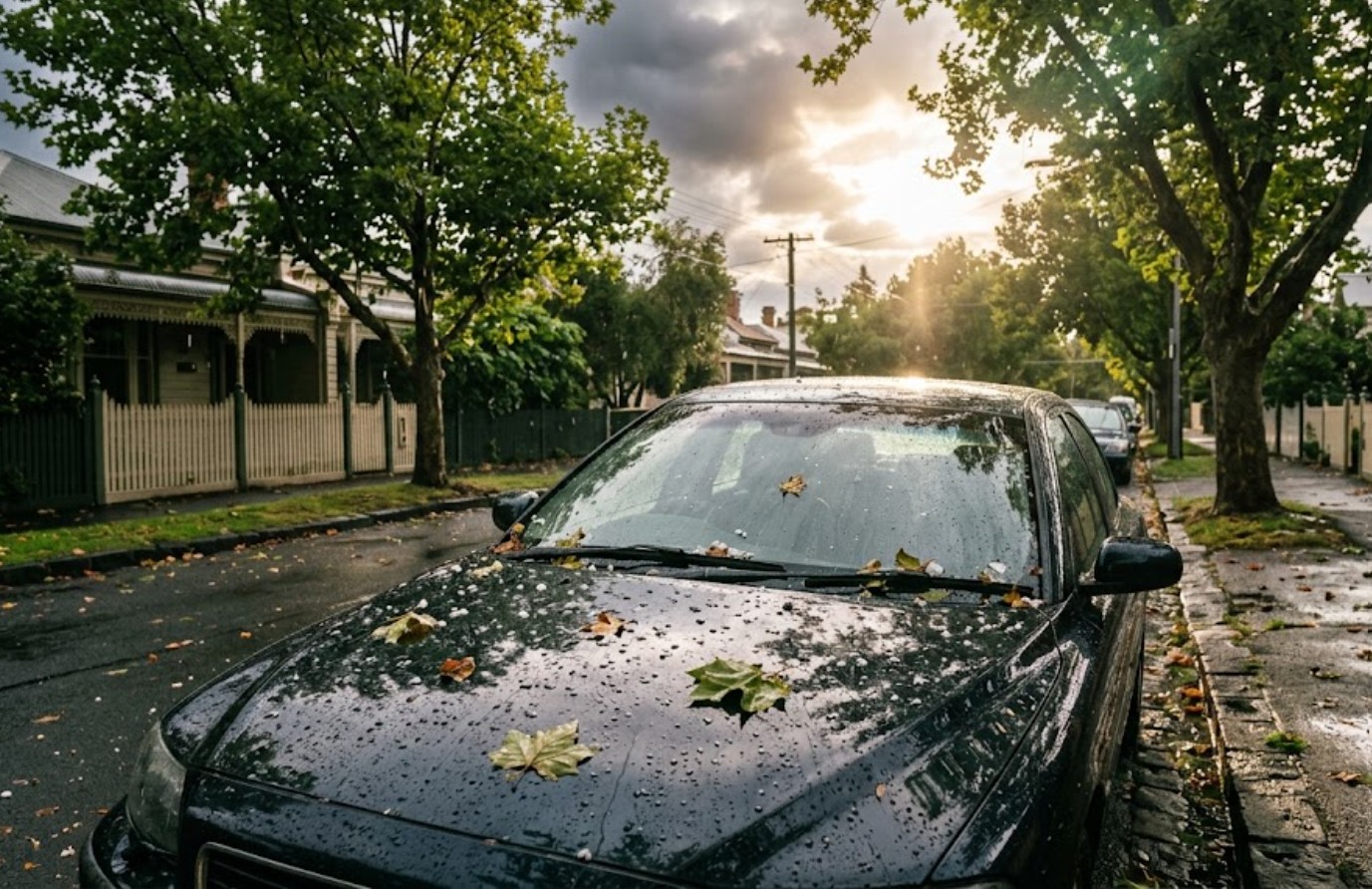
Autumn in Melbourne means plane tree leaves, and lots of them. Wet leaves left on paint for a week can leave faint brown outlines behind. Out in the eastern suburbs and up towards the Dandenongs, cars parked on the street spend winter mornings under frost or heavy dew, so any damage already in the paint stays wet for months at a stretch.
Small Habits That Protect Your Paint
Very little of this needs money. Mostly it’s timing.
- Get droppings and sap off within a day or two, soaked first, never scrubbed dry
- Wash early or late, out of direct sun
- Hose the dust off before a mitt or cloth goes anywhere near it
- A breathable cover or carport, if you’ve got the option
- Touch up chips in autumn, before the wet weather sets in
Protection makes the biggest difference over time. Even a basic wax gives droppings and water spots something to sit on besides the clear coat, and a ceramic coating stretches that out to years rather than months. If the paint already feels rough or looks tired, a professional detail before summer is worth booking, so the paint goes into the UV season clean and protected.