Solar panels are designed to operate outdoors, but that does not mean their surfaces remain clean in every condition. Across Melbourne, rooftop solar systems are exposed to changing weather, airborne dust, pollen, traffic residue, bird droppings and seasonal smoke. During dry periods or after bushfire smoke has moved across the region, fine particles can settle on panel glass and remain there long after the air appears clear.
Pollen can create a similar issue, particularly during spring and early summer when nearby trees, grasses and flowering plants release large quantities into the air. While a light layer may not look significant from ground level, repeated exposure can gradually form a visible film. When pollen combines with moisture, dust or other contaminants, it may adhere more firmly to the panel surface.
Solar panel cleaning after Melbourne’s pollen and bushfire seasons can help remove this seasonal build-up. It also provides an opportunity to identify bird activity, accumulated leaves and other debris that may be affecting the area around the solar array.
Why Melbourne Solar Panels Accumulate Seasonal Debris
Melbourne’s weather can shift quickly between dry, windy, wet and humid conditions. These variations influence how contaminants settle on rooftops and how easily they are removed naturally. A strong wind may carry pollen, dust and fine debris onto a property, while a brief shower can dampen the material without washing it away completely.
How pollen settles on rooftop solar systems
Pollen is lightweight and can travel considerable distances through the air. Homes do not need to be surrounded by large gardens for pollen to reach their roofs. Trees in neighbouring properties, street planting, parks and wider vegetation can all contribute to seasonal pollen levels.
Once pollen lands on solar panel glass, it may remain loose until it is exposed to moisture. Dew, light rain and humidity can cause the particles to clump together or form a thin coating. As this layer dries, it may become more difficult to remove through rainfall alone.
Panels with a lower tilt may collect more material because contaminants do not slide away as easily. Dirt may also gather along frames and lower edges, where water naturally drains and leaves residue behind.
The impact of dust, smoke particles and airborne ash
Smoke from bushfires or planned burns can carry extremely fine particles over broad areas. Even when a fire is not close to metropolitan Melbourne, smoke and haze may travel with changing wind conditions. Fine ash and airborne residue can then settle on roofs, vehicles, windows and solar panels.
The amount of build-up will vary depending on the property’s location, roof exposure and weather conditions. Homes on open sites or in outer suburban areas may experience more airborne dust, while properties near major roads or construction activity can receive additional grime from local sources.
Although individual particles may be small, repeated deposits can create a noticeable layer over time. This is especially likely when there is little sustained rainfall to rinse exposed surfaces.
How Pollen and Bushfire Residue Can Affect Solar Panels
Solar panels generate electricity when sunlight reaches their photovoltaic cells. Any substance sitting on top of the glass can reduce the amount of light reaching those cells. The actual effect depends on the thickness, distribution and type of contamination.
A uniform light film may have a relatively modest impact, while concentrated deposits can create more noticeable obstruction. Bird droppings, clumps of leaves and patches of hardened residue are generally more likely to create localised shading than evenly distributed dust.
Uneven build-up and localised shading
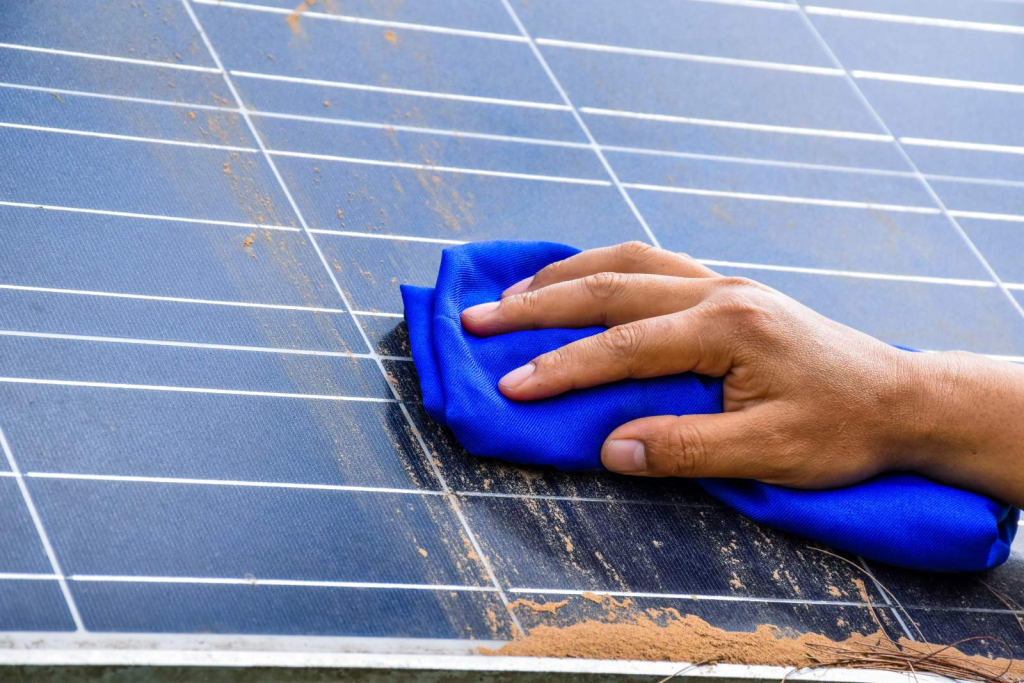
Seasonal contamination rarely settles perfectly evenly. Wind direction, roof pitch, panel angle and nearby structures can all affect where debris gathers. One section of an array may remain relatively clear while another develops a heavier coating.
Panel edges and corners often collect residue because rainwater carries dirt towards drainage points. Bird droppings can also create isolated spots that remain in place through several weather events. If birds are nesting beneath the panels, the surrounding area may receive repeated contamination from feathers, nesting material and droppings.
Monitoring software may help homeowners notice changes in overall solar output, but reduced production can have many causes. Weather, cloud cover, shading from vegetation, equipment faults and normal seasonal variation can all influence results. Visible contamination should therefore be considered alongside the broader condition of the system.
Why Melbourne Rain Does Not Always Clean Solar Panels
Rain can help remove loose surface dust, but it should not always be treated as a complete cleaning method. Light showers may simply move contaminants around the panel rather than washing them away. Once the water evaporates, pollen, dust and mineral residue may remain as streaks or marks.
Heavier rainfall can rinse some exposed material, particularly from steeply tilted panels. However, hardened bird droppings, sticky pollen, sap and oily traffic residue may require more direct cleaning.
The difference between rinsing and thorough cleaning
Rinsing relies on water flowing over the surface. Thorough solar panel cleaning involves loosening and removing adhered contamination using suitable water and non-abrasive equipment. The aim is to clean the glass without damaging coatings, frames, wiring or nearby roof materials.
Rainwater also follows natural drainage paths, which means it may carry dirt towards the lower edge of a panel and leave a concentrated band behind. This can explain why panels sometimes appear cleaner across the centre but remain marked near the frame.
Melbourne’s alternating wet and dry conditions can make the problem more visible. Moisture softens debris, but warm or windy weather may then dry it rapidly onto the surface.
When Melbourne Homeowners Should Inspect Their Solar Panels
There is no single cleaning schedule that applies to every property. A suburban home near mature trees will experience different conditions from a warehouse in an industrial area or a house in an exposed outer suburb.
A visual inspection may be useful after a prolonged pollen period, a smoke or ash event, extended dry weather or strong winds. Inspections can also be considered before summer, when many households expect their solar systems to support increased daytime electricity use.
Signs that cleaning may be required
Solar panels may need attention when there is a visible dusty film, streaking, bird droppings or leaf debris across the array. Dirt collecting along the lower edges or between adjoining panels can also indicate that natural rainfall is not removing contamination effectively.
Homeowners may notice birds repeatedly entering the space under the panels, nesting material near gutters or increased droppings around the roofline. These signs suggest that cleaning alone may not address the source of the recurring mess.
A reduction in solar production can be another reason to investigate, although it should not automatically be blamed on dirty panels. Comparing performance with similar weather periods and checking for system alerts can provide additional context.
Safe Solar Panel Cleaning After Pollen and Bushfire Seasons
Solar panel cleaning should be approached carefully because it involves electrical equipment, fragile glass surfaces and roof access. Using the wrong tools can create scratches or damage seals and surrounding components.
Abrasive brushes, scouring pads and harsh chemicals should generally be avoided. Even small scratches can trap future grime and affect the appearance of the glass. Strong detergents may also leave residue behind if they are not rinsed properly.
Why high-pressure cleaning can be risky
High-pressure water may force moisture into panel connections, seals or roof penetrations. It can also disturb wiring, damage mounting components or lift fragile roofing materials. More pressure does not necessarily produce a better result, particularly when the contamination requires gentle loosening rather than force.
Panels should not be cleaned when they are extremely hot. Applying cold water to a hot glass surface may create unnecessary thermal stress, and water can evaporate quickly before the surface is properly rinsed. Early morning or cooler conditions are generally more suitable, provided roof surfaces are not wet or slippery.
Roof access presents a separate safety concern. Melbourne homes include a wide variety of roof types, pitches and heights, and some surfaces become unstable or slippery with age. Homeowners should avoid climbing onto a roof unless they have appropriate access equipment, experience and safety controls.
Professional Solar Panel Cleaning in Melbourne
A professional solar panel cleaning service can assess the roof, the level of contamination and the most suitable cleaning method before work begins. The process typically involves removing loose debris, using purified or low-residue water where appropriate and cleaning the panel surface with non-abrasive equipment.
The method should be adapted to the property rather than applied in exactly the same way at every site. Roof material, access, panel layout and the type of residue all influence the approach.
Removing stubborn seasonal residue
Pollen and fine ash can form a thin, persistent film, especially when mixed with moisture or urban grime. Bird droppings and sap may require additional soaking so they can be removed without aggressive scrubbing.
Professional cleaning also allows the surrounding area to be visually checked for leaves, nesting material and obvious signs of damage. A cleaner is not a substitute for a licensed solar technician, but they may be able to identify visible issues that warrant further inspection by an appropriately qualified professional.
Combining Solar Panel Cleaning With Bird Proofing
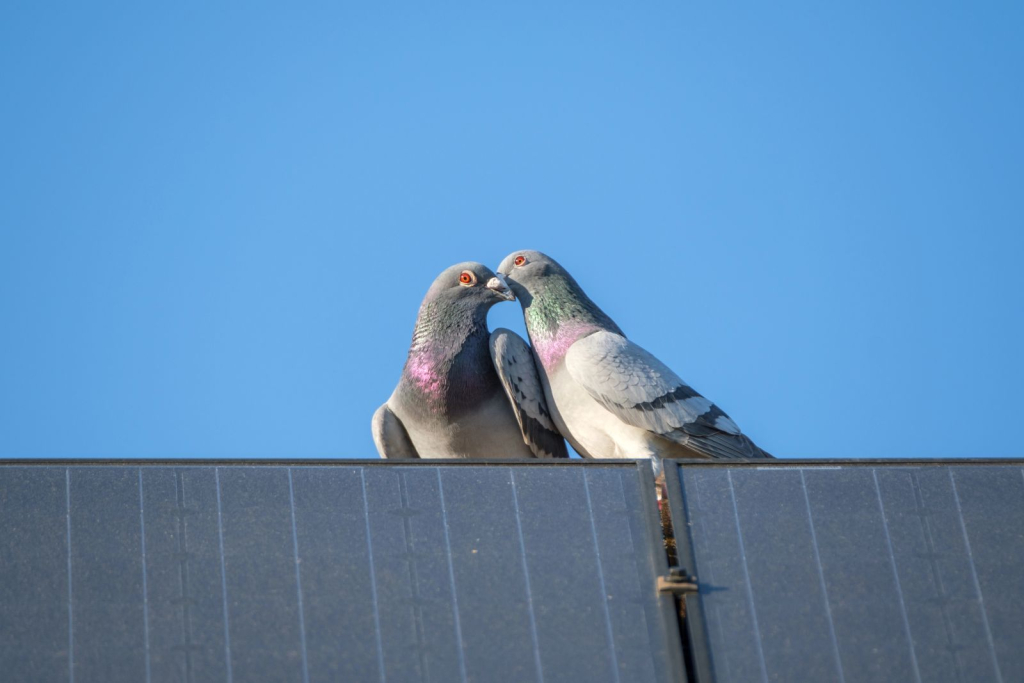
Birds are attracted to the space beneath solar panels because it can provide shelter from weather and predators. Pigeons are a common concern in urban areas, although other species may also investigate rooftop cavities.
Once birds begin nesting beneath an array, contamination can return quickly after cleaning. Droppings may collect on panels and roofs, while twigs and nesting material can move into gutters or obstruct drainage paths.
How bird proofing reduces recurring debris
Solar panel bird proofing usually involves fitting a purpose-designed mesh around the outer perimeter of the array. The barrier is intended to prevent birds from entering the space beneath the panels while maintaining airflow around the system.
The mesh should be installed without drilling unnecessarily into the panel frames or interfering with wiring. Existing nests and bird activity must also be assessed before installation. Active nesting situations may require additional care, particularly when eggs or dependent young are present.
Combining cleaning with bird proofing can be practical when the system has already been affected by repeated nesting. The area can be cleared as appropriate, the accessible surfaces cleaned and the entry points secured to reduce future contamination.
How Often Should Melbourne Solar Panels Be Cleaned?
Cleaning frequency depends on the environment around the property. Homes near trees, parks, major roads, industrial areas, construction sites or open land may experience faster accumulation than properties in less exposed locations.
Roof pitch is also important. Steeper panels are generally more likely to shed loose material during heavy rain, while flatter installations may retain water, dust and pollen for longer. Bird activity can increase the need for cleaning regardless of the surrounding environment.
Rather than relying on a rigid calendar, homeowners can use seasonal inspections to guide maintenance. A system that remains visibly clear may not need the same attention as one affected by heavy pollen, ash or nesting birds.
Keeping Solar Panels Ready for Melbourne’s Changing Conditions
Melbourne’s pollen periods, dry weather and occasional smoke events can leave solar panels coated with contaminants that are not always removed by rainfall. Over time, pollen, dust, ash, bird droppings and rooftop debris may build up unevenly across the array.
Regular visual checks and appropriate solar panel cleaning can help keep the surface clear without exposing the system to abrasive tools, harsh chemicals or high-pressure water. Where birds are nesting beneath the panels, bird proofing may also reduce recurring debris and help protect the surrounding roof and gutters.
A maintenance approach based on the property’s location, roof design and seasonal exposure is more useful than assuming every solar system requires the same schedule. By inspecting panels after high-pollen periods, smoke events and extended dry conditions, Melbourne property owners can respond to build-up before it becomes heavily established.